Colorado Boating Age Changed June 1, 2026: 7 Steps for Parents

Colorado requires motorboat and personal watercraft operators to be at least 18 years old. Operators aged 14 to 17 may legally run a motorboat only after completing a Colorado Parks and Wildlife approved boating safety course and carrying the resulting certificate while on the water. This standard comes from SB23-069, effective June 1, 2024.
TL;DR:
- Operators aged 14 to 17 must complete an approved boating safety course and carry proof on board, but this does not apply on private waters or rental vessels that restrict under-18 rentals.
- The minimum age to operate a motorboat or personal watercraft is now 18, with an exception for 14 to 17-year-olds who have the certificate; enforcement can include a fine of around $100.
- Certification options include online courses and live Zoom classes, which are approved by CPW and transfer from other states, making preparation accessible for families.
- Parents should treat 18 as the default age for legal operation, ensuring the teen has the certificate and documentation before boating, as supervision alone does not meet legal requirements.
- Colorado residents must still register their boats separately, and a safety certificate does not substitute for vessel registration, which is renewed annually.
Table of Contents
- The law in detail: SB23-069 and what CRS 33-13-107.1 requires
- Who needs a boating safety certificate and how to keep proof while operating
- How to get certified in Colorado: step-by-step actions parents and teens must take
- Course formats and what to expect: in-person review sessions vs fully online courses
- Enforcement and penalties: what to expect if rules are violated
- Safety rules that especially affect minors: life jackets, PWCs, and equipment requirements
- Operator certificate vs boat registration: two separate Colorado obligations
- How Safe Boating America helps Colorado residents meet the legal requirement
- Author perspective: a short, practical take for parents
- Get certified before your next trip on Colorado water
- Where to verify the rules yourself
- Sources
- FAQ
The law in detail: SB23-069 and what CRS 33-13-107.1 requires
Colorado Revised Statute 33-13-107.1, amended by SB23-069, sets 18 as the default minimum age to operate a motorboat or personal watercraft. The statute carves out one exception: individuals aged 14 to 17 may operate if they have completed an approved boating safety course and hold the certificate. This provision took effect June 1, 2024, replacing older rules that many sites still reference with an outdated age of 16.
The exception does not apply everywhere. Private waters, meaning bodies of water not open to the public, fall outside these operator requirements. Rental and livery operations face separate restrictions and generally cannot rent motorized vessels to operators under 18, regardless of certification status.

Who needs a boating safety certificate and how to keep proof while operating
Any operator between 14 and 17 must both complete the course and keep the certificate accessible while running the boat. CPW guidance confirms the certificate must stay in immediate possession or in an accessible place on the vessel during operation.
- Operators 14 to 17 need course completion plus physical or digital proof on board.
- Law enforcement can request the certificate during a routine safety check.
- Courts may waive a fine if an operator demonstrates prior course completion even without the card in hand.
- Youth course enrollment commonly requires proof of age and a parent or guardian present at registration.
A digital scan stored on a phone, paired with a paper card, reduces the chance of a citation tied strictly to possession rather than qualification.
How to get certified in Colorado: step-by-step actions parents and teens must take
Getting a teen legal to operate a motorboat follows a defined sequence rather than a single test.
- Confirm the operator’s age and whether the 18-and-over rule or the 14-to-17 exception applies.
- Locate a CPW-approved course offered in-person, by Zoom, or fully online.
- Complete the required home-study material or online modules at the operator’s own pace.
- Attend any required instructor-led review session, which is standard for youth classes.
- Pass the final test administered by the course provider.
- Receive the boating safety certificate and confirm whether the provider issues it same day.
- Check rental or livery terms before assuming a teen with a certificate can rent a boat, since many liveries still restrict rentals to adults.
Pro Tip: Book the course several weeks before a planned boating trip, since some providers schedule review sessions on fixed dates rather than on demand.
Course formats and what to expect: in-person review sessions vs fully online courses
Colorado accepts more than one path to certification, and the right format depends on age and schedule.
- Youth courses typically combine home study of a printed or digital manual with an in-person or virtual review session before testing.
- Fully online courses let adults and older teens complete material and testing without a scheduled class, provided the course carries CPW or NASBLA approval.
- Course content covers navigation rules, personal watercraft operation, required safety equipment, and emergency procedures.
- Certificates earned in other states transfer to Colorado when that state’s requirements are not less restrictive than Colorado’s own.
Families who moved to Colorado or took a course elsewhere should compare their original curriculum against Colorado’s standard and keep the original certificate on hand when boating locally.
Enforcement and penalties: what to expect if rules are violated
Operating without the required certificate, when one applies, is a civil infraction carrying a fine around $100 under SB23-069. A parent sitting beside a 14- to 17-year-old does not satisfy the law. The statute requires the certificate itself, not adult supervision, as the qualifying condition for that age group.
Rental businesses and liveries add another layer of restriction, generally declining to rent motorized vessels to anyone under 18 even when that operator holds a valid certificate. Anyone planning to rent for a teen should confirm the policy directly with the rental company before the trip.
Safety rules that especially affect minors: life jackets, PWCs, and equipment requirements
Beyond the operator-age rule, Colorado Parks and Wildlife requires children 12 and under to wear a U.S. Coast Guard approved life jacket at all times when the vessel is on the water, not just when the boat is moving. Every person on board also needs access to an appropriately sized, approved life jacket regardless of age.
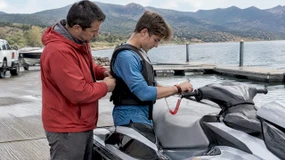
Personal watercraft, including jet skis, fall under the same motorboat definition used for the operator-age rule, so the 18-and-over standard and the 14-to-17 exception apply equally to PWC operators. Vessels should also carry required equipment such as a fire extinguisher and, where applicable, an engine cut-off switch, since these items support safe operation across every age group.
Operator certificate vs boat registration: two separate Colorado obligations
A boating safety certificate proves an operator completed training. It does not register the vessel itself. Colorado residents must separately register any motorized or sail-powered boat used on public waters, and that registration renews annually through Colorado Parks and Wildlife. A certified 15-year-old operator can still be stopped for an unregistered boat, since the two requirements address different obligations. Fee details and the registration process are listed directly on the CPW registration page.
How Safe Boating America helps Colorado residents meet the legal requirement
Safe Boating America offers online computer-based boating safety courses and live Zoom classes built to satisfy state education requirements, giving Colorado families a practical path through the 14-to-17 certification pathway. Courses use NASBLA-aligned materials and are taught by State Certified Instructors and USCG-licensed captains, covering navigation rules, PWC operation, and required safety equipment.
Enrollment typically takes a few minutes online, and certification timelines depend on whether the operator chooses a self-paced online module or a scheduled Zoom review session. The Colorado boating and PWC certification course page outlines current course dates and formats for state residents.

Author perspective: a short, practical take for parents
Treat 18 as the real default and the 14-to-17 pathway as a conditional exception, not a shortcut. Complete the course, confirm the certificate is issued, and keep both paper and digital copies on hand before assuming a teen is cleared to operate. The paperwork, not a parent’s presence, is what satisfies the law.
— Richard
Get certified before your next trip on Colorado water
Families with a 14 to 17 year old operator have two practical routes: a live Zoom session or a fully online course, both of which satisfy Colorado’s education requirement without requiring a classroom visit. The Zoom format suits teens who do better with a scheduled instructor-led review, while the online course fits those who prefer working through material at their own pace.
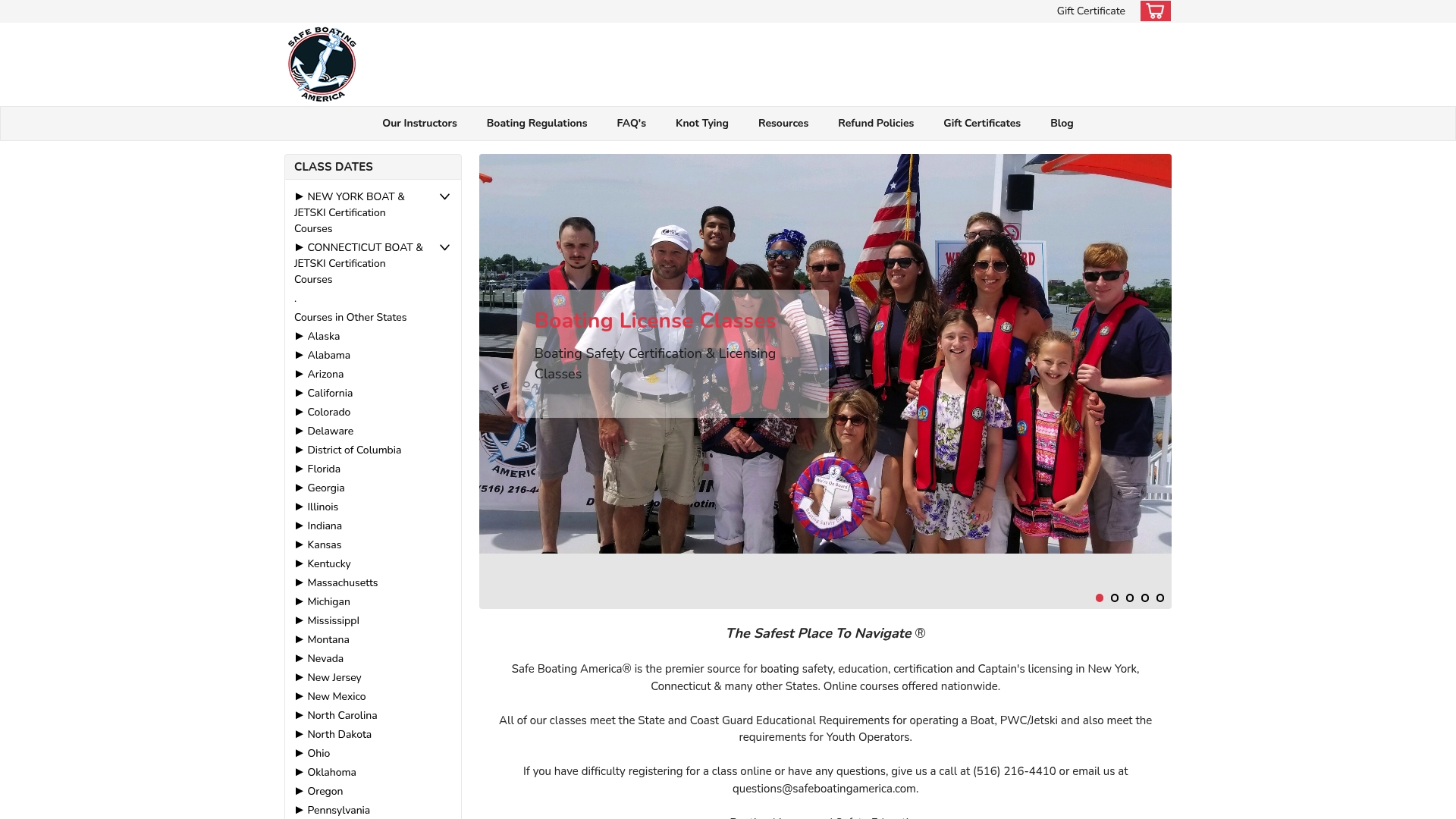
Safe Boating America’s Zoom Online 1-Day Class runs $75, and the NYS Safe Boating Class is $85, both built around NASBLA-aligned material that transfers across recognized state programs. Colorado residents can also start directly from the online nationwide courses page if a Colorado-specific session is not currently scheduled. Enroll now to have a certificate in hand before the next trip to the lake.
Where to verify the rules yourself
- SB23-069 bill text for the exact statutory language and effective date.
- CPW boating safety guidance for course formats and life jacket rules.
- CPW boat registration page for annual registration fees and process.
Save or print the CPW certificate page once testing is complete, since it serves as backup proof if a digital copy is unavailable.
Sources
- SB23-069 (Colorado Legislature)
- Boating Safety | Colorado Parks and Wildlife
- Register a Boat | Colorado Parks and Wildlife
FAQ
Do I need a license to drive a boat in Colorado?
Colorado does not issue a traditional driver’s-style license for boats, but it does require a boating safety certificate for operators aged 14 to 17, while anyone 18 or older can operate without one. The certificate functions as the state’s proof of completed safety training under SB23-069.
Can a 15 year old drive a boat alone in Colorado?
Yes, a 15 year old can operate a motorboat alone in Colorado after completing an approved boating safety course and obtaining the certificate, which must stay accessible on board. Without that certificate, operating alone at 15 is not legal under current state law.
What is the 1/3 rule in boating?
The 1/3 rule is a fuel-management practice, not a Colorado statute: boaters plan to use one third of their fuel going out, one third returning, and keep one third in reserve for emergencies. Colorado’s boating safety courses typically cover this kind of practical fuel planning as part of general safe-operation guidance.
Can a 12 year old drive a jet ski in Colorado?
No, a 12 year old cannot legally operate a jet ski in Colorado, since personal watercraft fall under the same motorboat rule requiring operators to be at least 18, or 14 to 17 with an approved safety certificate. A 12 year old does not meet either threshold and cannot operate independently under current law.
Does a boating safety certificate replace boat registration in Colorado?
No, a boating safety certificate and boat registration are separate requirements in Colorado. The certificate proves an operator’s training, while registration, renewed annually through Colorado Parks and Wildlife, is a separate requirement tied to the vessel itself.