Long Island Boating License: Get NYS Compliant in One 8 Hour Course
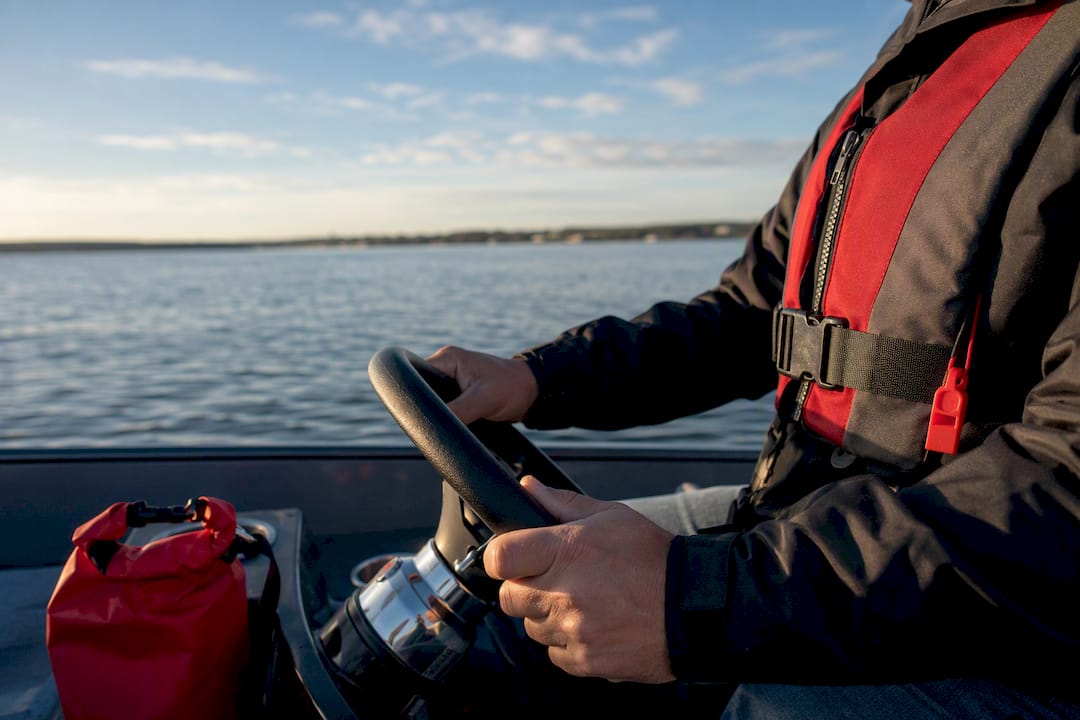
Yes. If you operate a motorized boat or personal watercraft on Long Island, you must hold a New York State Boating Safety Certificate under Brianna’s Law. The route there is a state-approved 8-hour course, taken online or in a classroom, followed by an exam. Providers like Safe Boating America run Long Island–accessible classes that satisfy this requirement directly.
TL;DR:
- All boaters operating motorized vessels or personal watercraft on Long Island must obtain a lifetime New York State Boating Safety Certificate under Brianna’s Law, with no expiration or renewal needed.
- Approved courses, including online, in-person, and virtual options, require at least 8 hours of instruction from certified providers, and the temporary certificate is valid for 90 days until the permanent one arrives.
- The DMV anchor icon added to your driver’s license costs $12.50 and serves as a digital proof of certification, but carrying the actual paper certificate is still recommended for travel outside New York.
- Boaters must comply with additional laws such as wearing life jackets, observing speed limits near shore and swim zones, and operating navigation and safety equipment correctly.
- Exemptions from certification exist only for professionally credentialed vessel operators or recent out-of-state certificate holders, not for experienced casual boaters.
Table of Contents
- Who Needs a Long Island Boating License Under Brianna’s Law?
- What Course Format and Hours Satisfy New York Requirements?
- How Do You Get a Boating License in New York, Step by Step?
- Where Can Long Island Residents Take an Approved Course?
- What Does a Boating License Cost, and What About the DMV Anchor?
- Does a New York Boating Safety Certificate Ever Expire?
- What Happens If You Lose or Damage Your Boating Certificate?
- What Other Boating Laws Apply on Long Island Beyond Education?
- A Practical Take on Preparing for Certification
- Get Certified on Long Island Without the Guesswork
- Sources
- FAQ
Who Needs a Long Island Boating License Under Brianna’s Law?
Brianna’s Law phased in mandatory boating education over several years, and as of January 1, 2025, it covers every operator of a motorized vessel in New York, including personal watercraft riders. There’s no exemption based on how long you’ve been boating or how familiar the waters are. If the engine has a throttle, the law applies.
Age rules matter here. Students must be at least the minimum age required by law to enroll in a state-approved course, but operating a personal watercraft solo requires additional age thresholds under state law, so check current PWC operator rules before letting a young teen take the helm alone on Nassau or Suffolk waters.
A few categories are exempt from the certificate requirement:
- Licensed U.S. Coast Guard or Canadian Coast Guard vessel operators
- Certified boating safety instructors and members of U.S. Power Squadrons or the USCG Auxiliary
- New York residents who recently moved from another state and hold a comparable out-of-state certificate get a one-year grace period to obtain New York’s version, per the Safe Boating Education rules
The exemptions exist for people who’ve already proven competency through professional credentialing, not for casual boaters who’ve simply “been doing this for years.” That distinction trips up a lot of longtime Long Island boat owners who assume experience alone counts.
What Course Format and Hours Satisfy New York Requirements?
New York requires a minimum of 8 hours of instruction (or an approved equivalent) to earn certification, and the state accepts several formats as long as the provider is properly credentialed.
- Classroom courses — full-day or multi-session in-person instruction, offered by Safe Boating America.
- Live virtual (Zoom) classes — real-time instruction with a certified teacher, combining scheduling flexibility with direct Q&A access.
New York builds its curriculum standards around NASBLA-aligned boating education content, so any course claiming state approval should explicitly say so, not just imply it. Before you register, confirm four things with the provider:
- A written statement of NYS Parks approval, not just “state-compliant” marketing language.
- Instructors who are state-certified or USCG-licensed captains, not general fitness or hobby instructors moonlighting.
- A clear exam pass policy, including what happens if you fail on the first attempt.
- Immediate issuance of your temporary 90-day card upon passing, rather than a vague “we’ll email it eventually.”
Pro Tip: Screenshot or print your provider’s approval statement before you register. If a class turns out not to be recognized, you’ll want proof of what you were told at signup.
How Do You Get a Boating License in New York, Step by Step?
Getting certified follows a predictable sequence, and knowing the timeline in advance saves you from scrambling before opening weekend.
- Choose and register for an approved course. Visit Safe Boating America's website to register.
- Complete instruction and pass the exam. Approved courses issue a temporary certificate immediately, valid for 90 days while your permanent card processes.
- Receive your permanent certificate by mail. This typically arrives within a few weeks of passing, and once issued, it’s valid for life. No renewal exams, no expiration date to track.
While you’re waiting on the permanent card, carry your temporary certificate and photo ID any time you’re operating a boat or PWC on Long Island waters. Marine patrol officers can and do check.
One detail trips up boaters who travel: the DMV Adventure License anchor icon on your driver’s license only proves certification within New York. If you’re boating in Connecticut, New Jersey, or anywhere else, bring the actual paper certificate. Most states recognize New York’s certification through NASBLA reciprocity agreements, but border patrol and marine officers in other states won’t know what your anchor icon means.
Where Can Long Island Residents Take an Approved Course?
Long Island offers a wider mix of course options than most regions, which is useful because format fit matters more than people expect.
- Private and group sessions. Private Long Island courses let families or boating groups schedule a class around their own calendar instead of waiting for a municipal date. This tends to suit people who need certification before a specific trip or purchase closing date.
- Community programs tend to run seasonally, filling up fast before Memorial Day weekend, so if a free town class matters to your budget, register early rather than waiting until April.
For most first-time boat owners, a hybrid approach works best: knock out the certificate requirement through whichever format fits your schedule, then spend a weekend with an experienced boater or a formal on-water refresher before you’re solo at the helm.
What Does a Boating License Cost, and What About the DMV Anchor?
Course fees vary by provider and format, generally landing lower for online options and higher for in-person or private group sessions. Beyond the course itself, you have a choice about how to carry proof of certification.
Adding the Adventure License anchor icon to your NYS driver’s license or non-driver ID costs $12.50 for a driver’s license or $5.00 for a non-driver ID if you want it issued immediately. Prefer not to pay right away? Wait until your next scheduled renewal and the anchor gets added at no extra charge. One catch: immediate issuance requires an up-to-date photo on file at the DMV, or your request gets delayed until the photo is refreshed.
If you own the boat itself, registration fees are based on boat length bands, as per NY DMV guidance, with fees increasing as boat length increases.
Does a New York Boating Safety Certificate Ever Expire?
No. New York’s permanent Boating Safety Certificate is a lifetime credential once issued. There’s no renewal exam, no annual fee, and no expiration date printed on the card.
That permanence is actually a departure from how some other states handle boater education, and it surprises people who assume certification works like a driver’s license with periodic renewal cycles. Once your permanent certificate arrives in the mail after your temporary 90-day card expires, you’re done. File it somewhere safe, add the DMV anchor icon if you want a backup digital proof point, and you won’t need to think about recertifying unless the underlying law changes.
The temporary card is the piece with an actual clock on it. That 90-day window exists purely to bridge the gap between passing your exam and the state mailing your permanent card, not as a probationary period or a partial credential. If your permanent certificate hasn’t arrived by the time the temporary one expires, that’s a sign to follow up with the course provider rather than assume you’re covered.
One practical note for households with multiple boaters: each person needs their own certificate. There’s no family or household credential that covers a spouse or teenage child. If three people in your household might operate the boat, budget for three separate course completions, even if you take the class together on the same day.
What Happens If You Lose or Damage Your Boating Certificate?
Misplacing a paper certificate happens, especially for boaters who’ve had theirs for years and don’t handle it often. The good news is replacement isn’t complicated.
If you’ve added the Adventure License anchor icon to your NYS driver’s license or non-driver ID, you already have a durable backup. Flashing that ID satisfies the in-state requirement even if the original paper certificate is long gone, faded, or soaked from a day on the water.
If you never added the anchor and the paper certificate is lost or damaged, your first move is contacting the course provider that issued it, since many retain completion records that can support a replacement request. From there, NYS Parks can help verify certification status for New York residents who need documentation restored.
Given how easy and inexpensive the anchor icon option is, most Long Island boaters find it’s worth the small DMV fee just to eliminate the “where did I put that card” problem entirely. A driver’s license is something you’re already carrying every time you’re behind the wheel of a truck hauling a trailer to the launch ramp anyway.
What Other Boating Laws Apply on Long Island Beyond Education?
Certification is the entry point, not the whole picture. New York enforces a set of on-water rules that apply regardless of how long ago you passed your course.
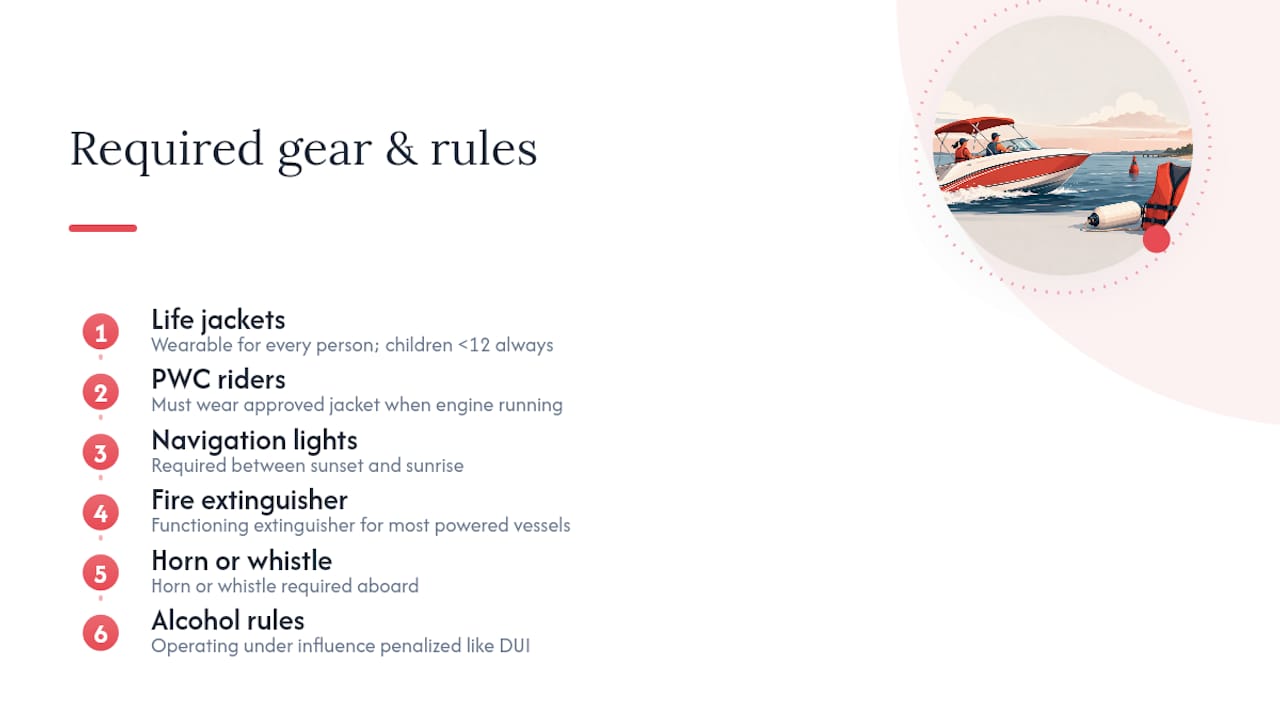
Required safety equipment includes a wearable life jacket for every person aboard, with New York mandating that children under 12 wear one at all times while underway on most vessels. Personal watercraft riders must wear an approved life jacket whenever the engine is running, no exceptions for “just going a short distance.”
Speed limits apply close to shore and in designated zones. Many Long Island waterways, including parts of the Great South Bay and sections near marinas and swimming areas, post reduced-speed zones that carry real fines if ignored. A vessel operating too fast near a swim area isn’t just a courtesy issue; it’s an enforceable violation.
Boats must carry navigation lights for operation between sunset and sunrise, a functioning fire extinguisher for most powered vessels, and sound-producing devices like a horn or whistle. Alcohol enforcement mirrors road rules: operating under the influence carries penalties comparable to a DUI, and marine patrol officers on Long Island actively check for it during summer weekends.
None of this is exotic. It’s the same category of common-sense equipment and courtesy rules that a solid 8-hour safety course actually teaches, which is exactly why the certificate requirement exists in the first place.
A Practical Take on Preparing for Certification
Online courses get you certified fast, but classroom time still teaches things a screen can’t: how a boat actually handles, what a docking mistake feels like before it costs you money. If you’re bringing a learner under 16, call the provider first. Policies on minors attending alone vary more than people expect. On certification day, bring photo ID, confirm your temporary card prints immediately, and check your registration and required safety gear before you leave the dock.
— Richard
Get Certified on Long Island Without the Guesswork
Safe Boating America is the direct path to a Brianna’s Law–compliant certificate for Long Island boaters who want to skip the trial and error of figuring out which provider is actually state-approved. Every course, whether in-person, live Zoom, or a private session for your family or boating group, is taught by state-certified instructors or USCG-licensed captains using NASBLA-aligned materials.
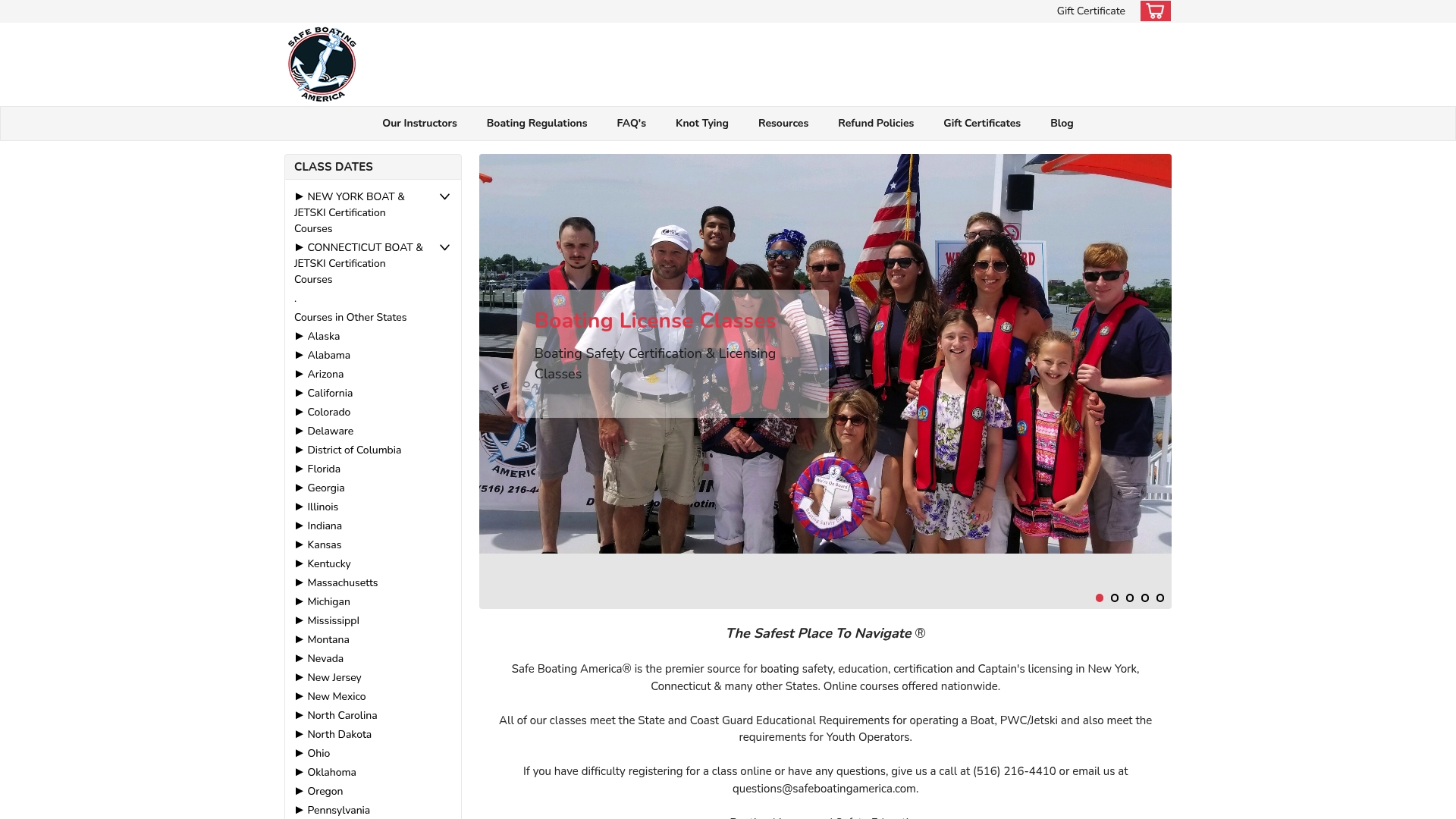
Students receive their temporary 90-day card immediately after passing, and Safe Boating America handles the paperwork tied to your permanent certificate arriving by mail. If you also want the DMV Adventure License anchor added to your license, staff can walk you through that process so you’re not guessing at fees or photo requirements on your own. Long Island residents can browse current New York boat and Jet Ski certification course dates or check out private Long Island and Eastern Suffolk sessions built for flexible group scheduling.
Ready to lock in a class before the season fills up? Visit Safe Boating America to register and pick the format that fits your schedule.
Sources
- Boating Education - New York State Parks & Historic Sites
- Register a Boat | NY DMV
- Boater Safety Adventure License
FAQ
Is a New York Boating License Valid in Other States?
Your permanent New York certificate is generally recognized in other states through NASBLA reciprocity, but the DMV Adventure License anchor icon only proves certification inside New York, so carry your actual paper certificate when boating elsewhere.
Is My Boating Certificate Valid in All States?
Most states honor NASBLA-aligned certifications from other states, including New York’s, but requirements and recognition rules vary, so check the destination state’s boating authority before you travel with your boat.
How Long Does It Take to Get a New York Boating License?
You get a temporary 90-day certificate immediately after passing your exam, and your permanent certificate typically arrives by mail within a few weeks.
Can I Get a New York Boating License Online?
Yes. State-approved online courses, including options through Safe Boating America, satisfy the 8-hour instruction requirement and issue a temporary card upon passing the exam.