Renting a Boat in Florida? Get the 90‑Day Temporary Certificate
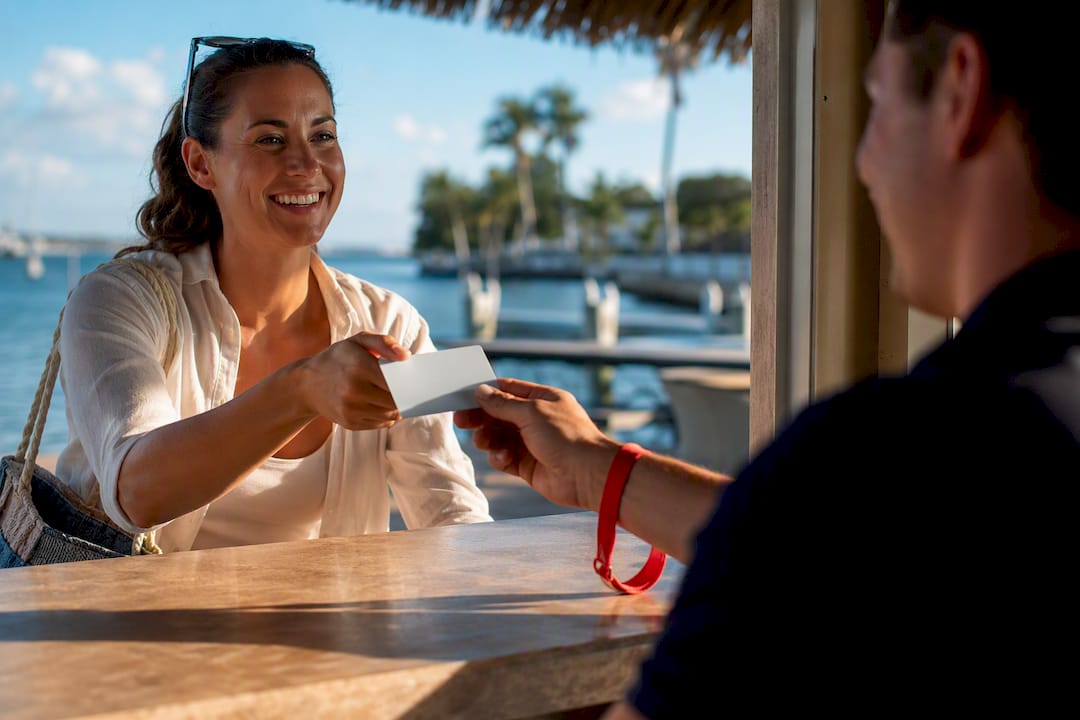
You don’t need a traditional “boat license” to rent a boat in Florida, but if you were born on or after January 1, 1988, and plan to operate a motorboat with 10 horsepower or more, you must carry a Boating Safety Education credential. The fastest fix for visitors is a 90-day temporary certificate from an FWC-authorized vendor, or proof of a NASBLA-approved course you already hold.
TL;DR:
- Boaters born on or after January 1, 1988, must carry a boating safety certificate to operate motorboats with 10 horsepower or more in Florida.
- The certification can be a temporary 90-day certificate from an authorized vendor or a lifetime card from a NASBLA-approved course, with costs varying by provider.
- Out-of-state NASBLA-approved certificates are accepted, eliminating the need for Florida-specific testing for these boaters.
- Rental operators must hold permits, provide pre-rental instruction, and require a demonstration before handing over vessels, regardless of the renter’s certification.
- Renters should bring a government-issued ID, proof of certification, and be prepared to verify safety equipment and vessel capacity before taking the boat out.
Table of Contents
- Who Needs a Florida Boating License to Rent?
- How Do You Get a Boating License to Rent in Florida?
- Where Do You Find FWC-Approved Vendors and What Does the Exam Cost?
- What Rules Do Liveries Have to Follow Before Handing Over a Boat?
- What Should You Bring to Pick Up a Rental Boat?
- Do Visitors and Out-of-State Boaters Need a Florida Certificate?
- Why Does Boating Safety Education Actually Matter?
- What Dockside Experience Teaches About Renter Mistakes
- Get Certified Before You Rent With Safe Boating America
- Where to Verify Florida’s Boating Rental Rules
- Sources
- FAQ
Who Needs a Florida Boating License to Rent?
Florida’s rule hinges on your birthdate and the horsepower of the vessel, not on the fact that you’re renting. Anyone born on or after January 1, 1988 must complete an approved boating safety course before operating a motorboat with 10 horsepower or greater, whether it’s a rental or their own boat. The card the FWC issues is proof of completed education, not a driving test or competency license.
A few groups fall outside this requirement:
- Boaters born before January 1, 1988
- Certain active military personnel operating under military orders
- Anyone already holding a valid out-of-state NASBLA-approved certificate
- Operators of vessels under 10 horsepower, such as small trolling motors
How Do You Get a Boating License to Rent in Florida?
Meeting Florida’s boating requirement is a short process if you plan ahead.
- Check if the rule applies to you. Confirm your birth date and the horsepower of the boat you intend to rent. If you’re under the 1988 cutoff or the motor is under 10 HP, you’re exempt.
- Pick your path. Visitors staying briefly usually take the temporary certificate. Florida residents or frequent visitors often complete a full NASBLA-approved course for a lifetime card.
- Study the material. Most vendors offer a short online course covering navigation rules, safety equipment, and emergency procedures before you sit for the exam.
- Pass the exam. The temporary certificate exam runs 25 questions, and you need 19 correct to pass.
- Save your proof. Keep a digital or printed copy of your certificate or card with your photo ID. Liveries will ask to see it before handing over the keys.
Once you clear the exam, the certificate or card travels with you, not the boat, so you can present it at any livery counter in the state.
Where Do You Find FWC-Approved Vendors and What Does the Exam Cost?
The FWC maintains an official vendor list for the Temporary Certificate Program, and only vendors on that list can issue a valid electronic certificate. Fees vary by vendor, but the exam itself follows the same standard everywhere in the state.
- Format: 25 questions, multiple choice
- Passing score: 19 correct answers or more
- Delivery: Fully online, with results issued electronically
- Validity: 90 days from the date you pass
- Limitation: Florida-specific and cannot be upgraded into a permanent FWC ID
Think of the temporary certificate as a bridge, not a destination. It gets you legally on the water for your trip, but if you’re back in Florida every few months, a full NASBLA-approved course and lifetime card save you from retaking the exam each visit.
What Rules Do Liveries Have to Follow Before Handing Over a Boat?
Rental operators, or “liveries,” carry their own legal obligations before you ever untie the dock line. Florida requires every livery to hold a no-cost permit and meet minimum insurance and safety equipment standards under Florida Statute 327.54.
- Liveries must carry statutory liability coverage and disclose it on request
- Rule 68D-34.002 requires pre-rental instruction covering local hazards, fueling, trailering, and float plans
- Motorized rentals require an on-water demonstration and check ride before departure
- Both the renter and the instructor must sign an attestation form documenting that instruction happened
The on-water check ride applies even if you already hold a valid Boating Safety Education card. It exists to confirm you can handle that specific vessel, not just that you passed a written exam.
Pro Tip: Ask to see the livery’s permit number and insurance certificate before you pay a deposit. A legitimate operator will produce both without hesitation, and it takes thirty seconds to verify you’re renting from a compliant business.
What Should You Bring to Pick Up a Rental Boat?
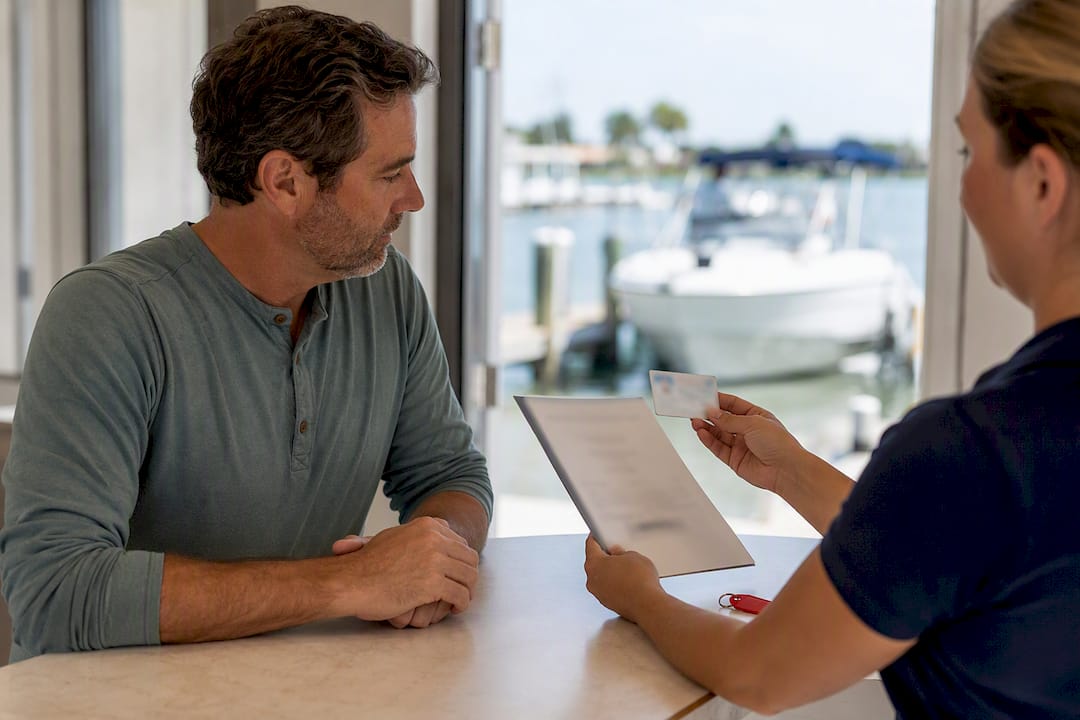
Show up prepared and the checkout process moves fast.
- A government-issued photo ID matching the name on your certificate
- Your Boating Safety Education ID card or temporary certificate, printed or on your phone
- A few minutes to confirm required safety equipment is aboard, including life jackets and fire extinguishers
- The vessel’s capacity plate, checked against your group size
- A question or two about optional renter insurance the livery may offer
Renters over 18 typically handle motorized vessel rentals themselves; liveries commonly require the primary renter to be an adult regardless of who else is aboard.
Do Visitors and Out-of-State Boaters Need a Florida Certificate?
Nonresidents get a straightforward path around the temporary certificate. If you already hold a NASBLA-approved certificate from your home state, Florida accepts it as equivalent proof, and you don’t need to sit for another exam.
- Out-of-state NASBLA-approved cards satisfy Florida’s requirement on their own
- Visitors without qualifying proof can still get a 90-day temporary certificate from an authorized vendor
- A temporary certificate can never convert into a lifetime Florida ID, even after multiple trips
If Florida is a once-a-year destination for you, the temporary route makes sense. If you’re down every season, the math favors a permanent card.
Why Does Boating Safety Education Actually Matter?
The FWC frames this requirement as risk reduction, not paperwork. Florida’s waterways see heavy recreational traffic, and mandatory education for anyone born after 1988 targets the demographic most likely to be renting or operating for the first time.
- Course material covers navigation rules of the road, right-of-way, and collision avoidance
- Emergency procedure training addresses man-overboard situations and distress signaling
- Vessel-specific handling segments prepare renters for docking and low-speed maneuvering
A Florida Boating & PWC Certification Course is often built around these exact topics, with online, live Zoom, and in-person formats depending on how you learn best. Quality instruction here isn’t a formality. It’s the difference between recognizing a channel marker at a distance and finding out what it means the hard way.
What Dockside Experience Teaches About Renter Mistakes
The three mistakes I see most: renters skip the certificate assuming rental staff will “just show them,” they never ask to see the livery’s permit or insurance, and they treat the check ride as an inconvenience instead of a safety step. Get your certification before you arrive. It turns pickup day into a formality instead of a scramble.
— Richard
Get Certified Before You Rent With Safe Boating America
Safeboatingamerica is the direct path around exam-day uncertainty for anyone planning a Florida boat or Jet Ski rental. Instead of cramming for a 25-question temporary exam the morning of your trip, the Florida Boating & PWC Certification Course Online walks you through the material at your own pace, with online, live Zoom, and in-person options built around Florida’s actual statutes.
Same-day certification paths mean you can knock this out the week before a trip instead of the night before. Whether you need a quick temporary certificate for a single visit or want the lifetime FWC card so you never deal with this again, Safeboatingamerica’s course covers both outcomes clearly before you register. Visit Safeboatingamerica to pick your format and get certified before you hit the dock.
Where to Verify Florida’s Boating Rental Rules
For the rules straight from the source, check these:
- FWC Temporary Certificate Program for exam details and the current authorized vendor list
- FLHSMV boating safety education page for lifetime ID information
- Florida Statute 327.54 for livery permit and insurance requirements
- Rule 68D-34.002 for pre-rental instruction standards
Sources
- FAQs About Boating Safety Education Requirements | FWC
- Temporary Certificate Program | FWC
- Chapter 327 Section 54 - 2026 Florida Statutes - The Florida Senate
- Florida Administrative Code — Chapter 68D-34 - Livery Pre-Rental and Pre-Ride Instruction Requirements
- Boating Safety and Education - Florida Department of Highway Safety and Motor Vehicles
FAQ
Do I Need a Boat License in Florida to Rent a Boat?
Florida doesn’t issue a traditional boat license, but if you were born on or after January 1, 1988, you need a Boating Safety Education credential to operate a motorboat of 10 HP or more, rental or otherwise.
Do You Need a Special License to Rent a Boat?
You need proof of boating safety education, either a lifetime FWC card or a 90-day temporary certificate, plus the livery’s own pre-rental instruction and check ride.
How Much Does It Cost to Get a Temporary Boating License in Florida?
Costs vary by authorized vendor since the FWC doesn’t set a single statewide fee; check the official vendor list for current pricing before you book.
Do You Have to Have a Boat License in the State of Florida?
Only if you were born on or after January 1, 1988, and you’re operating a motorboat with 10 horsepower or greater. Older operators and smaller motors are exempt.
Is a Jet Ski Rental License in Florida the Same as a Boat Rental Requirement?
Yes. Jet Skis and other personal watercraft fall under the same boating safety education rule, and Safeboatingamerica’s certification course covers PWC operation alongside standard motorboats.