January 1, 1974 Cutoff: Vermont Boating Age Rules and Same Day Card
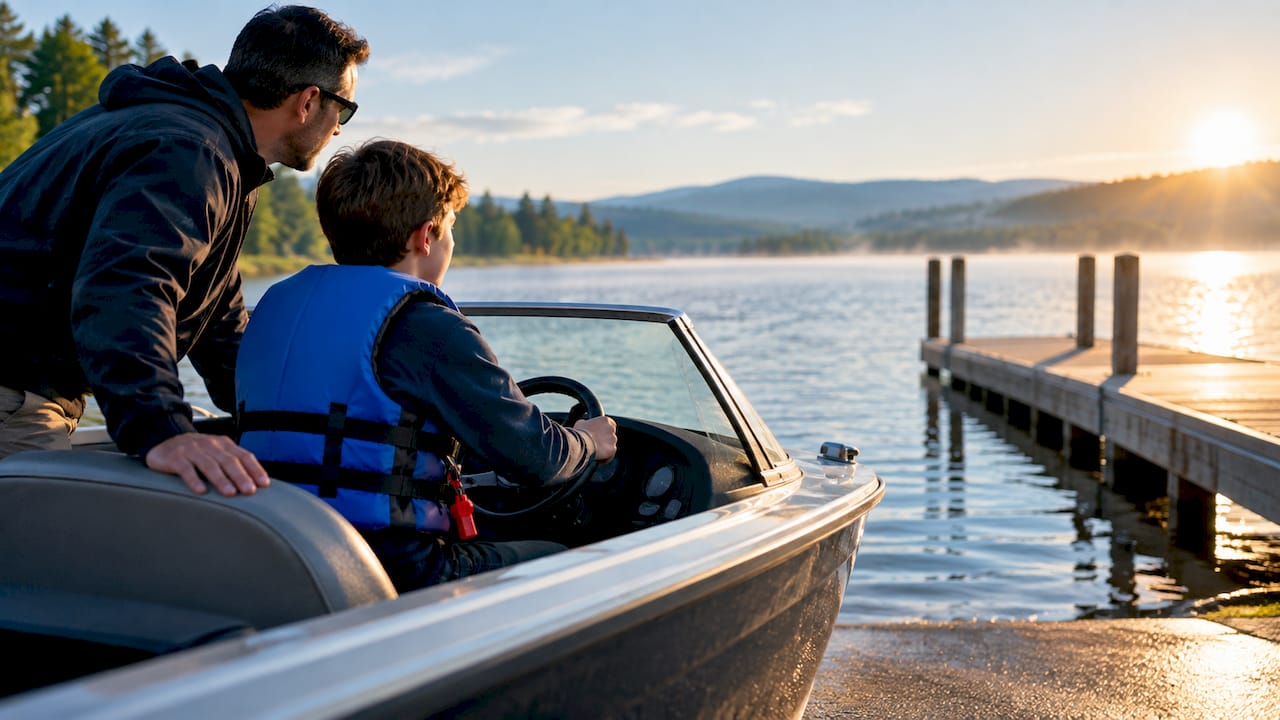
Vermont law requires anyone born after January 1, 1974 to carry a Boater Safety Certificate before operating a motorized vessel or personal watercraft. No one under 12 may run a motorboat over 6 horsepower, and no one under 16 may operate a PWC, certificate or not. Kids as young as 10 can take the course and earn the certificate, but that paperwork never overrides the age floors.
TL;DR:
- Boaters born after January 1, 1974, must carry a Vermont Boater Safety Certificate when operating motorized vessels or PWCs, regardless of residency.
- Minors under 12 cannot operate boats over 6 horsepower, and those under 16 cannot operate PWCs, even with a safety course completed.
- Out-of-state visitors with NASBLA-approved certificates generally do not need to retake the course but must carry proof on board.
- The safety certificate is valid for life and does not require renewal, but refresher courses can help keep knowledge current.
- Checking the motor’s horsepower rating, not just the boat size, is critical before allowing a minor to operate a vessel, especially if under 12.
Table of Contents
- Who Needs a Vermont Boater Safety Certificate
- Minimum Ages and Horsepower Limits for Minors
- How to Get a Vermont Boater Safety Certificate
- Reciprocity, Registration, and Compliance for Visitors
- Why Vermont Requires This, and How to Stay Current
- A Quick Checklist Before You Head Out
- Get Certified for Vermont Waters Before Your Next Trip Out
- Sources
- FAQ
Who Needs a Vermont Boater Safety Certificate
Vermont doesn’t issue a traditional boating “license.” Instead, Vermont State Police require a Boater Safety Certificate for anyone born on or after January 1, 1974, before that person operates a motorized vessel or personal watercraft on state waters. Statute 23 V.S.A. § 3305a spells out the operating privileges and age thresholds that back this rule.
The requirement covers motorboats and PWCs, not canoes, kayaks, or other manually propelled craft. A few practical points shape who this actually touches:
- The birth-date cutoff applies regardless of Vermont residency, so visitors from other states are on the hook too.
- Manually propelled vessels (canoes, kayaks, rowboats without a motor) are exempt from the certificate requirement.
- Age is irrelevant to the birth-date rule itself. A 55-year-old born in 1975 still needs the certificate; someone born in 1970 does not.
That last point trips up a lot of families. Older relatives often assume the rules are the same for everyone in the boat, when in fact one grandparent might be exempt by birth year while the parent driving the boat is not.
Minimum Ages and Horsepower Limits for Minors
Vermont sets two hard operating floors, and neither one bends for a completed safety course. Vermont State Police guidance is direct on this point:
- No one under 12 years old may operate a motorboat powered by more than 6 horsepower.
- No one under 16 years old may operate a personal watercraft, under any circumstance.
A 13-year-old with a valid certificate can legally run a small motorboat rated at 6 horsepower or less, often with an adult aboard depending on the vessel and situation. Put that same 13-year-old behind the controls of a WaveRunner or Jet Ski and the law doesn’t care how many courses they’ve passed. PWC operation stays off-limits until 16, full stop. This is one of the most common points of confusion Vermont families run into: a certificate proves someone passed a safety course, but it does not unlock privileges the age law reserves for older operators.
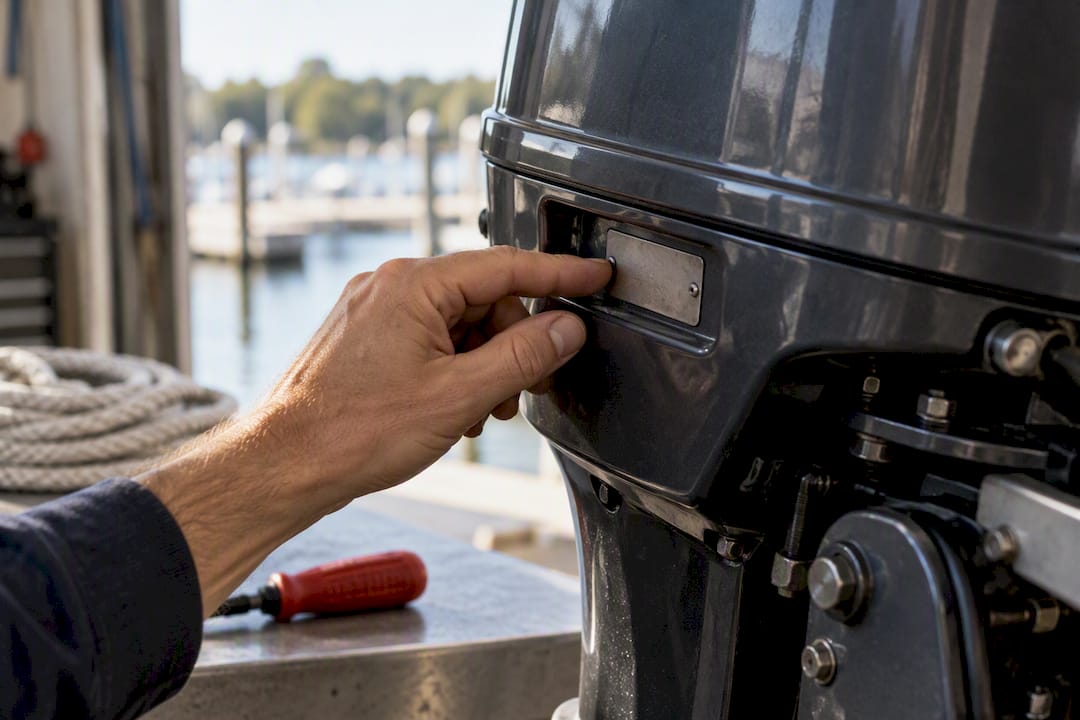
Pro Tip: Before letting a young boater take the wheel, check the horsepower rating stamped on the motor itself, not just the boat’s size. A compact-looking outboard can easily exceed 6 HP, and that number, not the boat’s length, determines whether a preteen can legally run it.
Life jackets matter here too. Whatever the horsepower or age situation, a minor operating any vessel should be wearing an appropriately sized, Coast Guard-approved PFD, with an adult supervising closely enough to intervene.
How to Get a Vermont Boater Safety Certificate
Vermont opens the door to certification at age 10, and the process is straightforward once you know which route to take. Courses generally fall into three categories: Boat Vermont classroom sessions run through Fish & Wildlife (often about eight hours), state-delegated online providers, and NASBLA-approved courses completed in other states.
- Confirm eligibility. Anyone 10 or older can enroll; the certificate itself becomes required once the operator was born after January 1, 1974.
- Pick a course format. Classroom, online, or an out-of-state NASBLA-approved option all satisfy Vermont’s standard.
- Complete the coursework and pass the final exam, which covers navigation rules, emergency response, and accident prevention.
- Print or save the certificate immediately after passing, since Vermont doesn’t mail a physical card automatically in every case.
- Carry that certificate whenever you operate a covered vessel, since Vermont DMV guidance treats it as required proof, not optional paperwork.
Safe Boating America’s Vermont Boating & PWC Certification Course Online covers this exact path for readers who want to knock it out without scheduling a classroom seat.
Reciprocity, Registration, and Compliance for Visitors
Vermont recognizes NASBLA-approved certificates earned in other states, so a boater who already completed an approved course back home generally does not need to retake one here. USCG and NASBLA state-law summaries confirm this reciprocity, though non-residents still need to have proof on hand.
A few things trip up visiting boaters more than anything else:
- Carry your original certificate (or a clear photo/copy) on board. Verbal assurance that you “took the course” won’t satisfy an officer doing a routine check.
- Out-of-state vessels have limited operating windows before Vermont registration or a validation sticker (Form VD-113) comes into play, per DMV instructions.
- Don’t assume a fishing license or another state’s registration sticker covers the boating safety certificate requirement. They’re separate documents entirely.
Why Vermont Requires This, and How to Stay Current
Vermont State Police frame the certificate requirement as a safety measure first, a legal formality second. The course content focuses on the situations that actually cause accidents on Vermont’s lakes and rivers.
Vermont State Police emphasize that the certificate exists to make sure operators understand navigation rules and emergency procedures, and they routinely clarify that this is a certificate, not a license, in the traditional sense.
The certificate itself never expires. Vermont State Police don’t require renewal, though voluntary refresher training is worth considering if it’s been a decade since you last reviewed navigation rules or right-of-way situations. Safe Boating America’s course formats, including nationwide online options, give both first-time boaters and rusty veterans a state-approved way to get squared away or brush up.
A Quick Checklist Before You Head Out
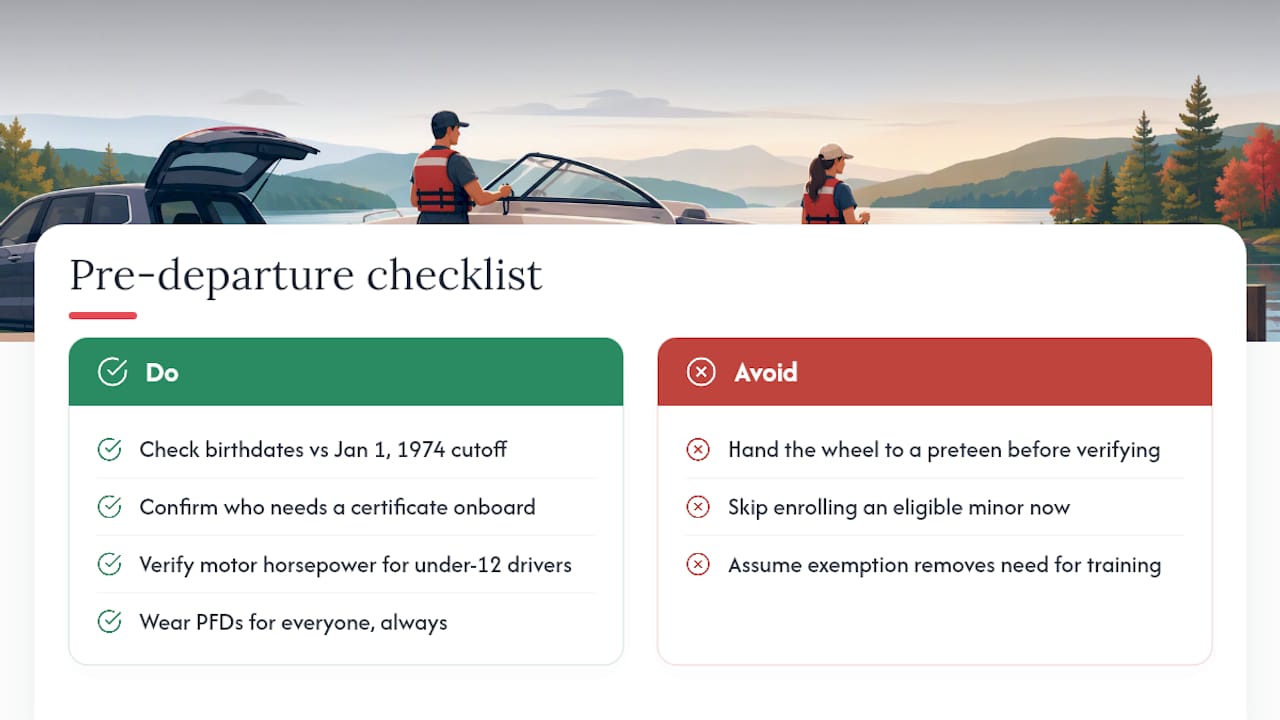
Before anyone in your boat touches the throttle, check birth dates against the January 1, 1974 cutoff and confirm who actually needs a certificate on board. If you’ve got a preteen itching to drive, verify the motor’s horsepower rating against the under-12 limit before you hand over the wheel. Enroll any eligible minor now if supervised practice is part of your summer plans, and don’t skip PFDs just because the water looks calm.
Even boaters exempt by birth year benefit from taking a course voluntarily. The water doesn’t check anyone’s paperwork before an accident happens.
— Richard
Get Certified for Vermont Waters Before Your Next Trip Out
Boaters can get Vermont compliance faster than researching statutes and course providers on their own, with a state-approved path built specifically for this state’s requirements. The Vermont Boating & PWC Certification Course Online walks you through the exact material Vermont State Police expect operators to know, taught by state-certified instructors, with same-day certification once you pass.
If you’re coming from out of state or just want more flexibility in scheduling, the nationwide online courses cover NASBLA-approved material that satisfies Vermont’s reciprocity standard along with dozens of other states. Families juggling summer schedules can also use live Zoom classes to get a minor certified without a weekend committed to a classroom. Head to the Vermont course page, pick a start time that fits your trip, and get the certificate printed before you launch the boat.
Sources
- Marine Unit | Vermont State Police
- § 3305a. Privilege to operate a vessel; minimum age for operation of a motorboat — Vermont Statutes
- Vermont registration, tax & title application — DMV
- State boating laws details — USCG/NASBLA
FAQ
Do I need a license to drive a boat in Vermont?
Vermont doesn’t issue a traditional boating license. Instead, anyone born after January 1, 1974 needs a Boater Safety Certificate to operate a motorized vessel or PWC, and that certificate never expires once earned.
How old do you have to be to operate a boat in Vermont?
Vermont sets no minimum age for a certificate holder to operate a standard motorboat, but state law bars anyone under 12 from running a motorboat over 6 horsepower and bars anyone under 16 from operating a personal watercraft entirely.
How old do you have to be in New York state to drive a boat?
New York’s age rules differ from Vermont’s and involve their own certificate and Brianna’s Law provisions; check Safe Boating America’s boating license age guide for a state-by-state comparison before assuming Vermont’s limits apply elsewhere.
Can you drink a beer while driving a boat in Maine?
That question concerns Maine law, not Vermont’s, and boating-under-the-influence rules vary significantly by state, so it’s worth checking Maine’s own marine patrol guidance directly rather than assuming any state’s alcohol limits carry over.
What states don’t require a boater’s license?
Requirements vary widely. Some states have no age-based certificate requirement at all, while others, including Vermont, tie the requirement to a birth-date cutoff rather than a universal age. NASBLA’s state law summaries break down each state’s specific rule.
How much does a Vermont boating safety course cost?
Course pricing depends on the provider and format you choose. Current pricing for Safe Boating America’s course options is listed directly on the Vermont course page.